Why Custom Size Booklets Matter for Your Next Print Project
When I started working with local businesses in Lancaster, Pennsylvania, I quickly learned that one size does not fit all when it comes to printed materials. A standard 8.5x11 booklet works fine for some things, but for others it feels like trying to fit a square peg into a round hole. That is where custom size booklets come into play. They allow you to match the format to the message, not the other way around.
Over the years I have seen how the right dimensions can change how people interact with a piece. A slim booklet sits differently in the hand. A square format stands out on a table full of rectangular brochures. These details matter when you are trying to make an impression. And when you work with a printer who understands that, the results speak for themselves.
What Makes Custom Size Booklets Different
The term custom size booklets covers a lot of ground. It can mean anything from a small 5.5x8.5 booklet to a 9x9 square format or a long 4x9 design. The key is that you are not limited to standard paper sizes. You choose the dimensions that fit your content and your audience.
For example, a training manual might need to fit in a binder or a pocket. A corporate brochure might need to match a specific envelope size for mailing. An event program might need to fold a certain way to fit in a welcome bag. When you go custom, you solve those problems before they become issues.
I have worked on projects where the client wanted a booklet that felt more like a small book than a brochure. By going with a 6x9 trim size and using perfect binding, we gave the piece a substantial feel that matched the depth of the content. Other times, a client needed something lightweight for a trade show. We used saddle stitching and a smaller format to keep costs down while still looking professional.
Binding Options and What They Mean for Your Booklet
The binding method you choose affects both the look and the function of your booklet. Two common options are saddle stitching and perfect binding. Each has its strengths.

Saddle stitching works well for booklets with fewer pages, typically up to about 64 pages. The staples along the fold line keep everything flat and allow the booklet to open completely flat. This makes it a great choice for event programs, training manuals, and marketing collateral that people will flip through quickly. It is also cost-effective for short runs.
Perfect binding, on the other hand, gives you a square spine and a more polished look. You see this on paperback books and high-end corporate brochures. It works for thicker booklets and allows for a spine that can carry a title. If you are producing portfolio books or annual reports, perfect binding adds a level of professionalism that saddle stitching cannot match.
I have seen projects where the binding choice made or broke the final product. A thick booklet with saddle stitching can look bulky and not lay flat. A thin booklet with perfect binding can look like it is trying too hard. Matching the binding to the page count and the purpose is part of the craft.
Paper Choices That Make a Difference
Paper is not just paper. The substrate you choose changes how the ink sits, how the light reflects, and how the piece feels in the hand. Two broad categories are coated paper and uncoated paper. Each serves a different purpose.
Coated paper has a smooth, sealed surface that holds ink well and produces sharp, vibrant images. It is ideal for full-color printing, especially when you are using photographs or detailed graphics. For a trade show booklet or a portfolio book, coated paper gives you that glossy, high-end look. You can also add finishes like spot UV coating or gloss lamination to make certain elements pop or to protect the cover.
Uncoated paper has a more natural, tactile feel. It absorbs ink more, which can make colors appear softer. It is a good choice for training manuals or any piece where people will write notes. It also works well for a more understated, professional look. Matte lamination on uncoated paper can give you a soft-touch finish that feels premium without being shiny.
I once worked with a client who wanted a set of corporate brochures that felt both modern and approachable. We chose an uncoated stock with a subtle texture and added a spot UV coating on the logo. The contrast between the matte surface and the glossy logo was striking. It showed that small choices in paper and finish can elevate a design.
Printing Methods: Digital vs. Offset
The printing method you choose affects cost, turnaround time, and quality. Two common methods are digital printing and offset printing. Each has its place.
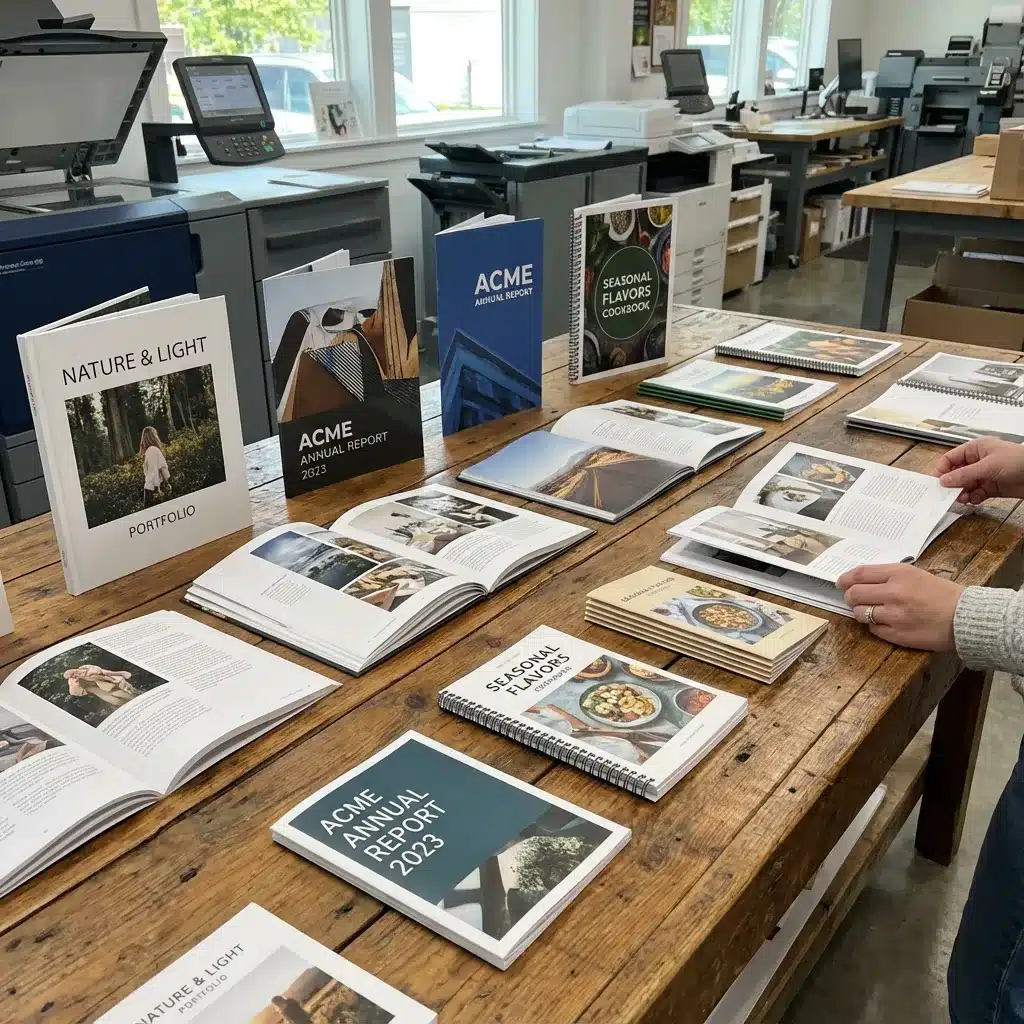
Digital printing works well for short runs. You can print as few as 10 or 25 copies without the setup costs that offset requires. It is also faster for quick turnarounds. If you need 50 custom size booklets for a meeting next week, digital is the way to go. The quality has improved a lot over the years, and for most projects it is more than adequate.
Offset printing becomes cost-effective at higher quantities. Once you get into the hundreds or thousands, the per-unit cost drops. Offset also gives you more precise color matching and works better on a wider range of papers. For large runs of corporate brochures or training manuals, offset is often the better choice.
I have seen projects where a client started with digital for a small test run, then moved to offset once they confirmed the design and the market response. That hybrid approach can save money and reduce risk.
Practical Details: Bleed and Layout
One detail that trips up a lot of first-time buyers is the bleed line. When you design a booklet, you need to extend images and backgrounds past the trim edge so that after cutting, there are no white strips. A standard bleed is 1/8 inch on each side. If you are designing custom size booklets, you need to account for that in your file setup.
I always tell clients to talk to their printer before finalizing the layout. A good printer will tell you exactly what they need. They will also let you know if your chosen size requires special trimming or if it fits a standard sheet. That can affect both cost and availability.
Real-World Applications
Custom size booklets show up in many contexts. Here are a few examples I have worked on:
- Event programs for a local arts festival in Lancaster. The client wanted a 7x7 square format that fit in a pocket and stood out from the usual 8.5x11 programs. We used saddle stitching and a coated cover with matte lamination for a soft finish.
- Training manuals for a regional healthcare provider. They needed a 5.5x8.5 booklet that fit in a binder pocket. We used uncoated paper so staff could take notes, and perfect binding for durability.
- Portfolio books for a photographer. We used a 9x9 square format with full-color printing on coated paper. The cover had a spot UV coating on the photographer's name. The result was a piece that felt as polished as the work inside.
In each case, the custom size made the piece more functional and more memorable. It was not about being different for the sake of being different. It was about matching the format to the need.
Working with a Local Printer
One advantage of working with a printer based in Lancaster is the personal support. You can sit down, look at paper samples, and talk through your options. That kind of collaboration is hard to get from a national online print shop. A local printer can also catch issues early, like a layout that does not account for the bleed line or a binding choice that will not hold up to heavy use.

I remember a project where the client wanted a square booklet but was worried about cost. We talked through the options and found a size that used a standard sheet with minimal waste. That kept the price down without sacrificing the look. That kind of problem-solving comes from experience and from knowing the equipment.
Final Thoughts
Custom size booklets give you control over how your message is received. Whether you are producing marketing collateral, trade show materials, event programs, training manuals, or portfolio books, the right size and finish can make a real difference. The choices you make about binding, paper, and printing method all feed into the final result.
If you are planning a print project, take the time to think about what format best serves your audience. Talk to your printer about your options. And do not settle for a standard size just because it is easier. Sometimes the extra effort of going custom is what makes the piece work.